Writing / Essay 01
90 Days in IcelandHjálpaðu mér að tala íslensku
Help me speak Icelandic
One of the hardest things about learning a language is practicing it.
Listen to this post
Read aloud · 7:37
0:000:00
Not studying it. Not memorizing vocabulary. Not sitting comfortably at home convincing yourself that yes, obviously I know this word.
Actually speaking it.
Eventually, another human being has to hear you.
And that person might respond.
This is where things get dangerous.
I am a self-described cultural junkie. I love traveling, I love languages, and I am fascinated by how speaking another person’s language—even badly—can connect you with someone in a fundamentally different way.
I’ve also always felt that attempting to speak someone’s language is a small act of respect for their culture.
Being an American abroad, I think that can mean more than we sometimes realize.
Which brings me to Icelandic.
Icelandic is difficult.
Very difficult.
I’ve spent months learning it. I’ve worked with a teacher. I’ve practiced vocabulary and grammar. I’ve stumbled through pronunciations that seem specifically designed to remind English speakers that confidence and competence are two very different things.
But eventually I realized something.
If I really wanted to know whether I could speak Icelandic, I needed to stop practicing Icelandic from a distance.
I needed Icelanders.
So I came to Iceland for 90 days.
The idea was to spend three months exploring Iceland, practicing the language, and getting a feel for the everyday side of the country.
Could I find my feet here?
Navigate the grocery stores? Find a few favorite spots? Deal with the weather, the prices, the language, the boring stuff, and the ordinary Tuesdays?
And, most importantly, could I actually use the Icelandic I’d spent all this time learning?
I expected my first real test to happen at a coffee shop.
Maybe a grocery store.
Perhaps I’d confidently order something, receive a response I wasn’t prepared for, panic, and spend the rest of the interaction nodding enthusiastically.
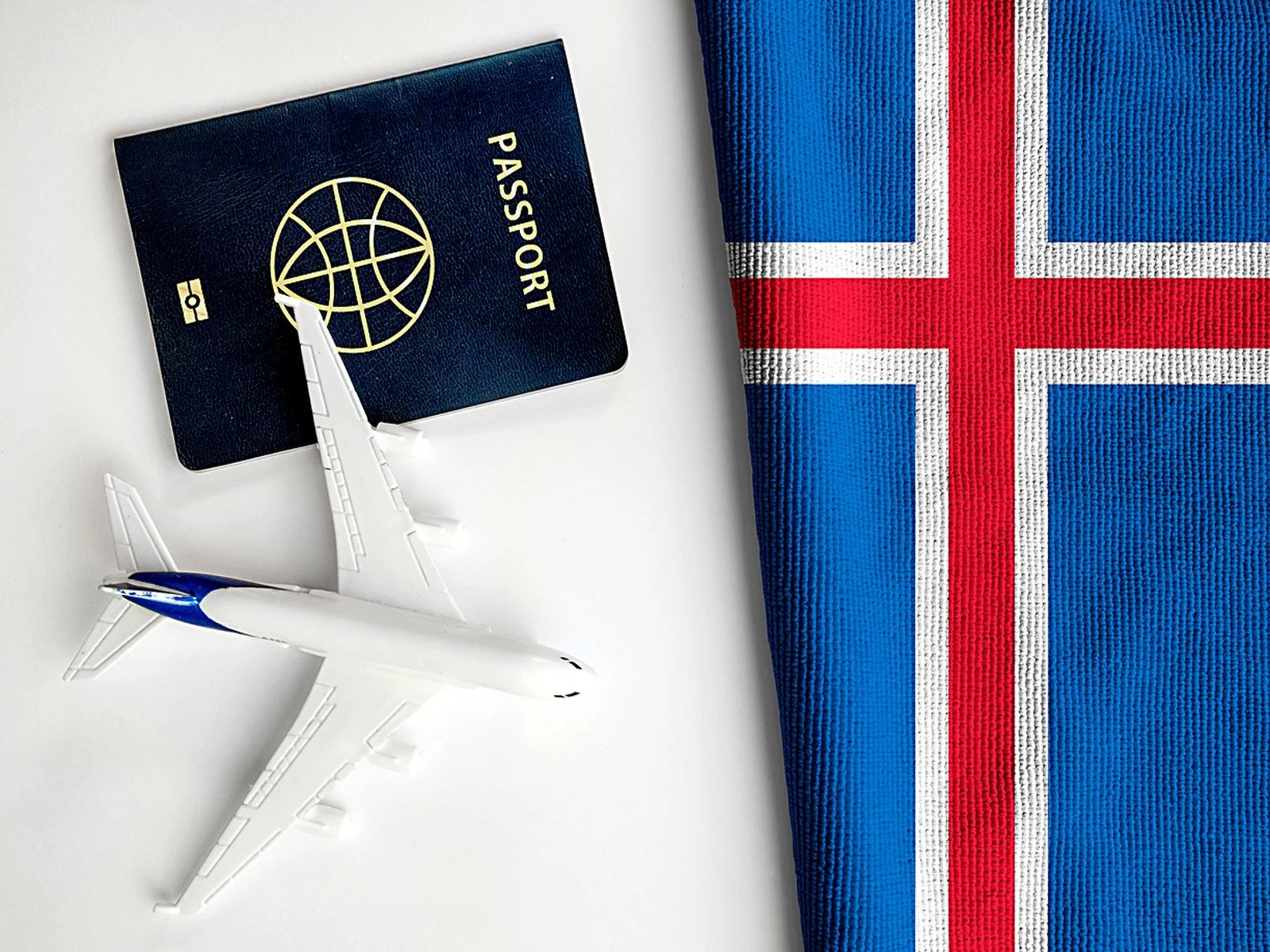
Instead, my first Icelandic exam happened approximately five minutes after getting off the airplane.
At border control.
Fantastic.
The officer looked at my passport and asked the perfectly reasonable question you would expect a border officer to ask someone arriving in Iceland for 90 days:
Why are you coming to Iceland?
There are many reasonable answers to this question.
Tourism.
Visiting friends.
Extended holiday.
I chose none of them.
Instead, I looked at an Icelandic border-control officer and said:
„Hjálpaðu mér að tala íslensku.“
Help me speak Icelandic
This did not answer his question.
Not even slightly.
I had essentially arrived at immigration and volunteered for an oral exam.
And the funniest part?
He accepted.
He started speaking Icelandic to me.
Oh.
Okay.
Apparently we’re doing this.
What followed was one of the most wonderfully chaotic conversations I’ve had while entering a country.
He would ask me something in Icelandic. I would understand enough to answer. He’d continue. I’d follow along.
Then we reached the questions that actually mattered for immigration purposes.
Where was I staying?
What was my address?
When was I leaving?
Did I have a return flight?
Suddenly my adorable little Icelandic experiment had consequences.
When the questions became more complicated, he switched into English. We handled the important details. Then, once those were out of the way, he switched back into Icelandic.
He wasn’t just humoring me.
He was actually making me do it.
I answered what I could. When I didn’t have the words, I improvised. I used gestures. I showed him information. I pulled up what he needed.
At some point, the entire interaction had basically become:
Confidence → consequences → improvisation → somehow, success.
And then something happened that I wasn’t expecting.
He complimented my Icelandic.
I remember something along the lines of „frábært“—great.
I had impressed him.
And that felt incredible.
Not because I’d suddenly proven that I could speak Icelandic fluently.
I absolutely had not.
What mattered was that I had survived.
I’d asked an Icelander to speak Icelandic with me.
He did.
I didn’t understand everything.
I didn’t have every word.
I couldn’t construct every sentence I wanted.
And I kept going anyway.
That might sound like a very small thing.
For me, it wasn’t.
One of the biggest barriers I’ve discovered in learning a language isn’t vocabulary. It’s embarrassment.
You spend months learning how to say something, and then suddenly there’s a real human being standing in front of you.
A native speaker.
Someone who can immediately hear every mistake you’re making.
And there is an incredibly tempting escape hatch available:
English.
Especially in Iceland.
I could switch to English.
They could switch to English.
Everything would become easier.
But easy wasn’t why I came here.
I came here because I wanted to find out what happened when Icelandic stopped being something I studied and became something I used.
And apparently Iceland decided we should begin that experiment at passport control.
There is also something slightly ridiculous about traveling thousands of miles to test your language lessons.
I don’t know what these 90 days will teach me about Iceland—or myself.
That’s part of the point.
These 90 days aren’t supposed to prove a conclusion I’ve already made.
They’re a chance to explore.
I want to know what Iceland feels like beyond the holiday highlights.
When I have an ordinary to-do list.
When I need groceries.
When it’s raining.
When I’m tired.
When something costs significantly more than I think it should.
When I have absolutely no idea what someone just said to me in Icelandic.
Can I find my rhythm during a longer visit?
Do I still love Iceland when the novelty wears off?
And can I become comfortable enough with this language that I’m willing to sound completely ridiculous while learning it?
I got my first answer before I’d even officially entered the country.
Yes.
At least to the last one.
I’m becoming less afraid of being bad at Icelandic in front of Icelanders.
And maybe that’s how you eventually become good at it.
So, for these 90 days, that’s the experiment.
Explore the country.
Try the everyday stuff.
Practice Icelandic.
Pay attention.
And whenever possible:
„Hjálpaðu mér að tala íslensku.“
Help me speak Icelandic
Just maybe don’t start with border control.
Or do.
Apparently it works.
Soundtrack
“Dirty Paws” · Of Monsters and Men
Listen on Apple Music →